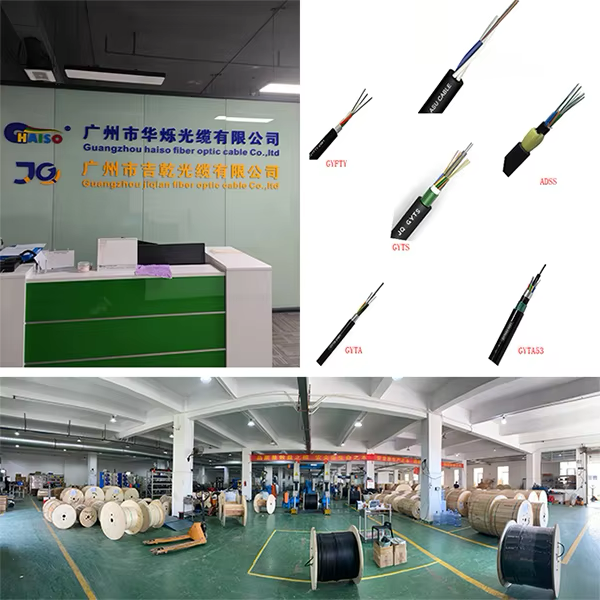
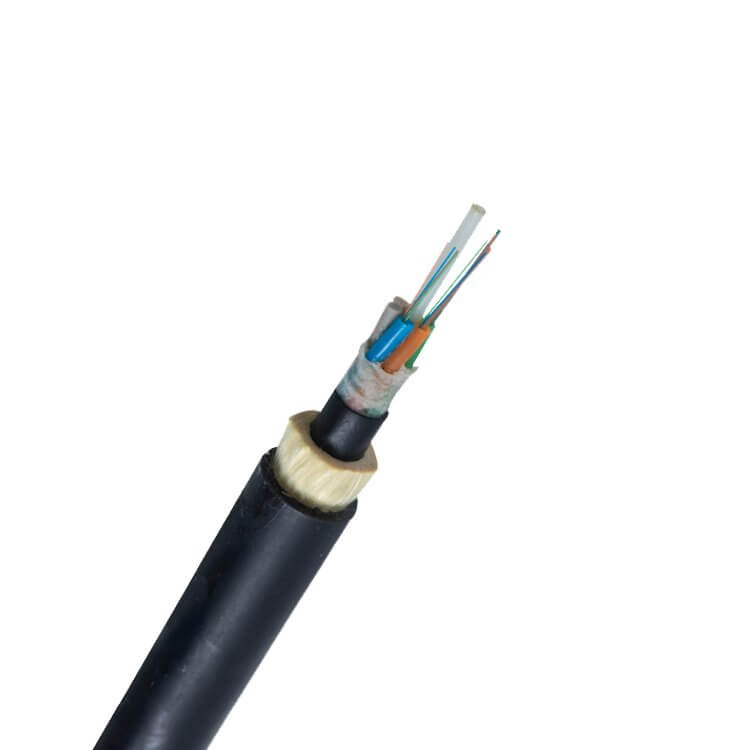
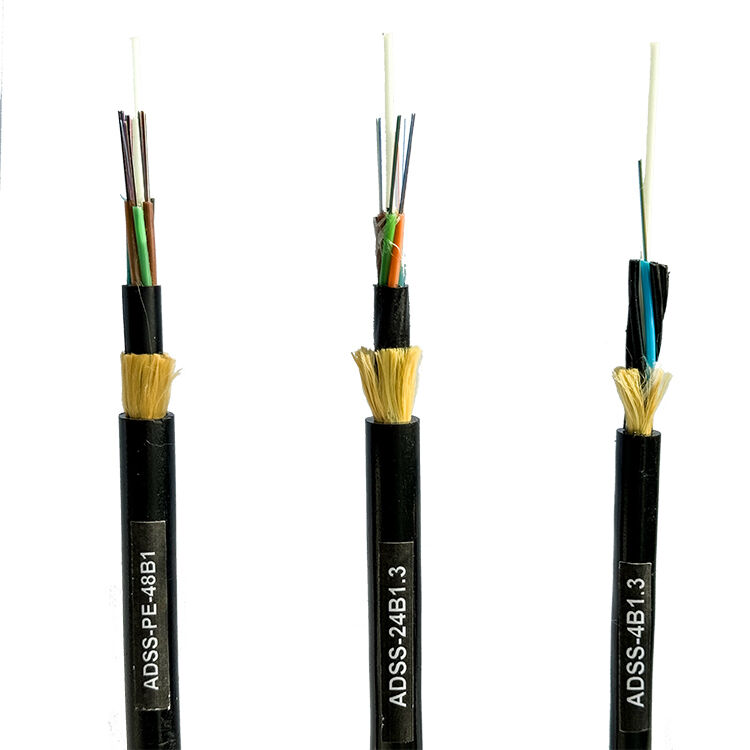
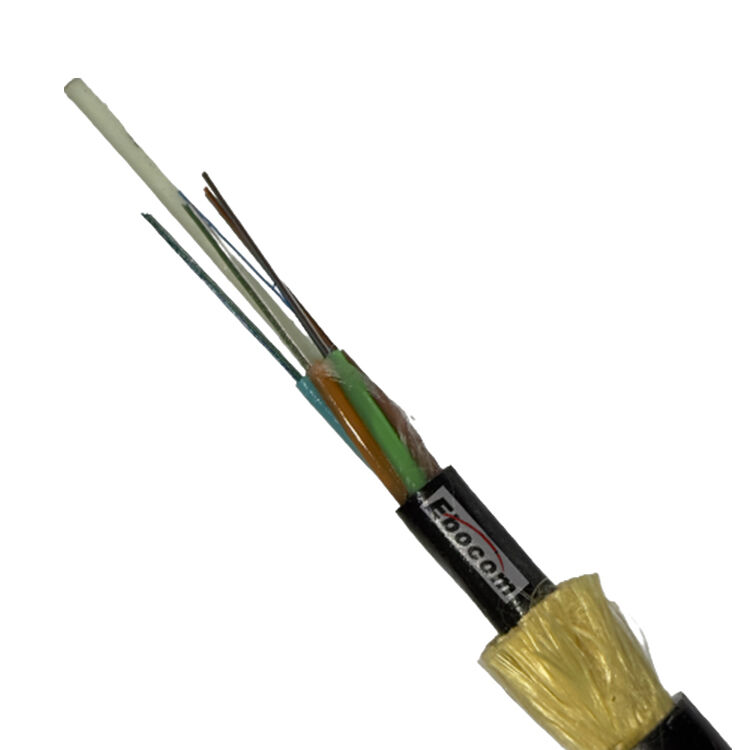
1. Full Name: All-Dielectric Self-Supporting (ADSS) optical cable.
Keywords: All-dielectric (metal-free), self-supporting (includes built-in tensile strength, requires no steel suspension wire), aerial installation on power utility towers.
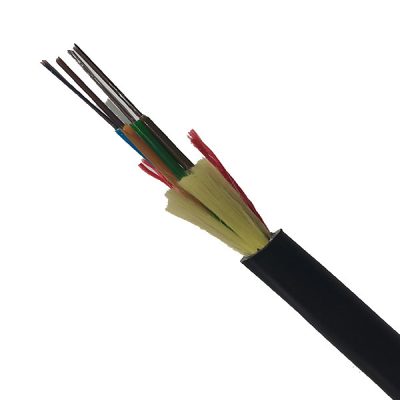
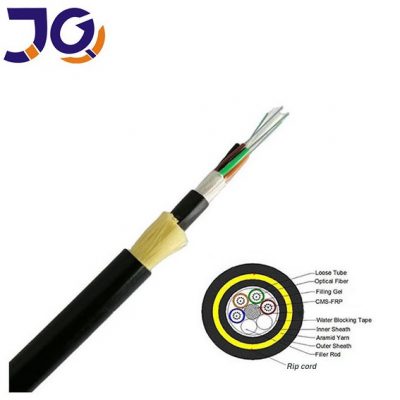
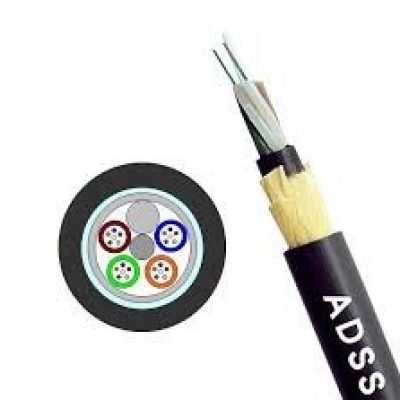
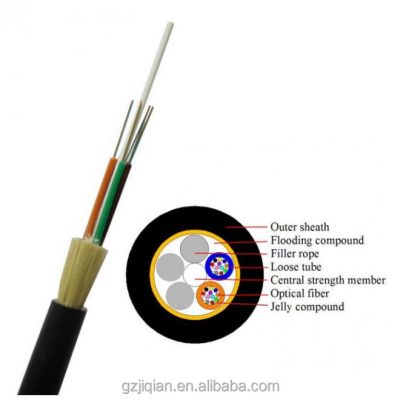
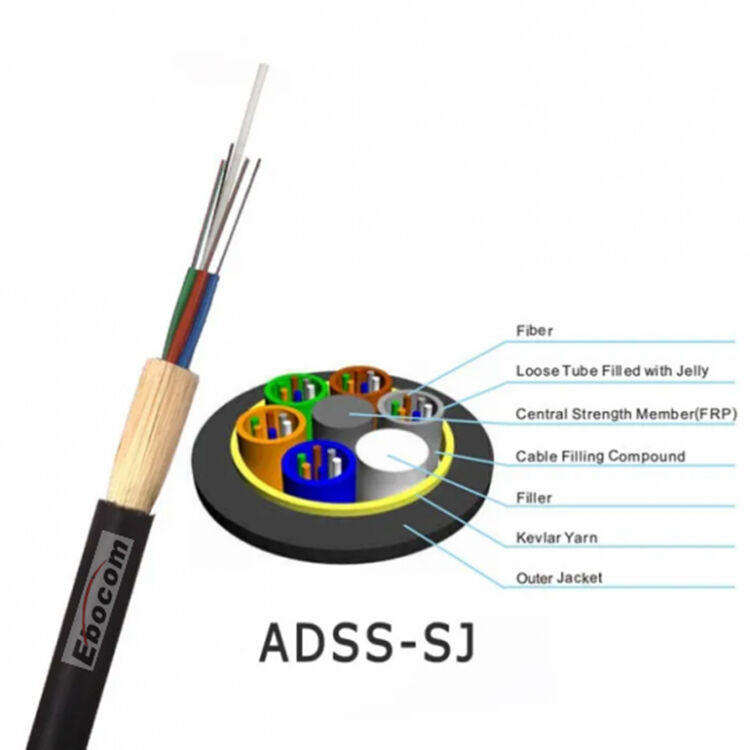
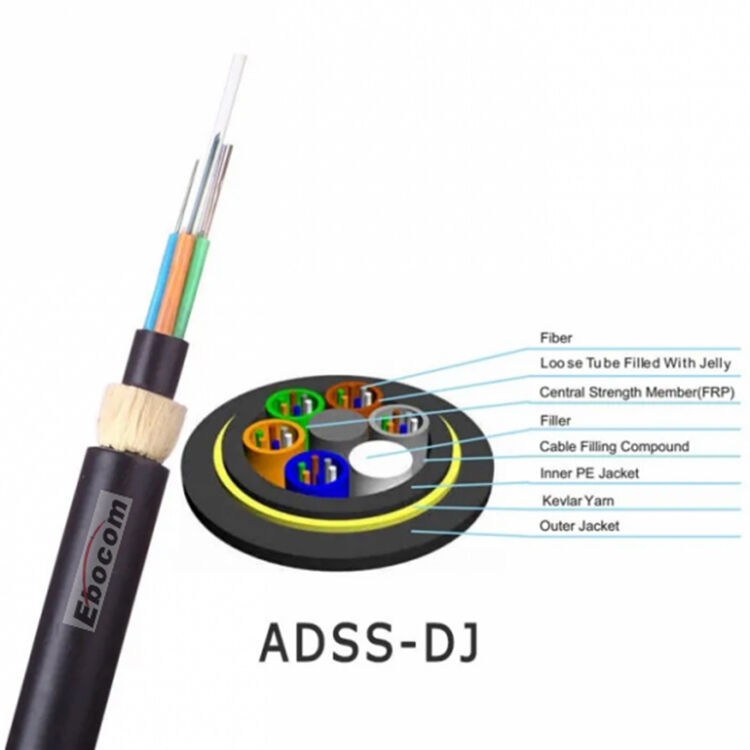
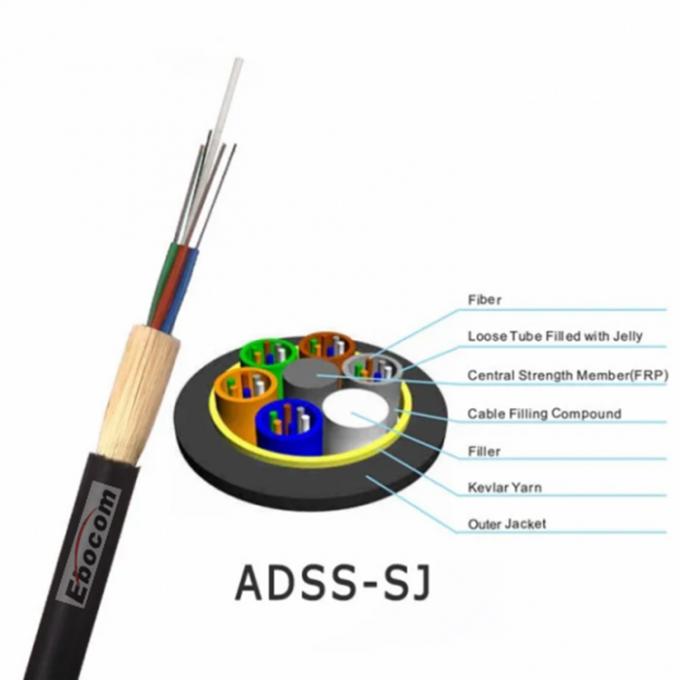
2. Basic Structure
Two mainstream structures: Stranded (for long spans and high fiber counts) and Central Tube (for short-to-medium spans, ≤48 fibers).
Optical Fiber: G.652D single-mode fiber housed in PBT loose tubes filled with water-blocking gel;
Central Strength Member: FRP (Fiber Reinforced Plastic)—non-metallic;
Tensile Strength Layer: Stranded aramid yarn (Kevlar) to bear the full tensile load (this refers to the stranded-yarn bonding process mentioned earlier);
Water-blocking Layer: Water-blocking yarn or gel to prevent moisture ingress;
Outer Sheath:
PE (Standard Sheath): For 10kV and 35kV lines (low electric field intensity);
AT (Track-Resistant Sheath): For 110kV and 220kV high-voltage lines; resistant to electrical erosion and arc tracking (AT sheath is mandatory for high-voltage applications).
Note: ADSS contains no metal components; it is non-conductive and requires no grounding.
3. Key Features
✅ Advantages
All-dielectric insulation and EMI resistance: designed for environments where electromagnetic interference should be minimized, making it suitable for installation alongside high-voltage transmission towers; allows for live installation without power outages (a major advantage for retrofitting existing lines).
Self-supporting, no steel suspension wire required: Relies on aramid yarn to bear self-weight, wind, and ice loads; mounts directly to towers, reducing auxiliary material requirements; lightweight, imposing minimal additional load on towers.
High span capability: Standard spans range from tens of meters to 500m; long-span availability is subject to sag-tension calculation, wind/ice load, installation conditions and technical confirmation by JQ.
Weather-resistant: Resistant to UV radiation and salt spray corrosion; designed for a service life of ≥30 years; suitable for outdoor environments. Wide range of fiber counts: Central tube designs offer 2–48 fibers; stranded designs support up to 144 fibers or more, meeting various bandwidth requirements.
Risk of electrical erosion in high-voltage environments: For 110kV and above, AT (Anti-Tracking) sheathing is mandatory; precise calculation of the electric field at the tower attachment point is required, as incorrect placement can lead to sheath ablation and damage.
No inherent lightning protection; direct lightning strikes can scorch the outer sheath, necessitating protective accessories such as specialized fittings and vibration dampers.
Long-span models require significant amounts of aramid yarn, increasing costs; the aramid stranding process demands high manufacturing precision.
4.Typical Application Scenarios
Power distribution network communication (primary application)
10kV–35kV distribution network automation, smart metering, fault monitoring, and dedicated power dispatch networks; allows for the installation of fiber optic cables on existing utility poles without requiring power outages for retrofitting.
Communication support for 110kV/220kV transmission lines (requires AT sheathing); serves as relay or branch links for OPGW systems.
Telecom / 5G base station backhaul
Utilizes existing utility pole lines for overhead FTTH, rural broadband, and 5G base station backhaul; eliminates the need for new communication poles, thereby reducing investment costs.
Security and communication for transportation, water conservancy, and mining
Overhead communication in mountainous areas, along waterways, or at mining sites; suitable for long-span overhead installation where complex terrain makes underground conduit laying difficult.
Long-span overhead communication links crossing rivers, valleys, etc.
Brief distinction between ADSS and OPGW (for engineering selection)
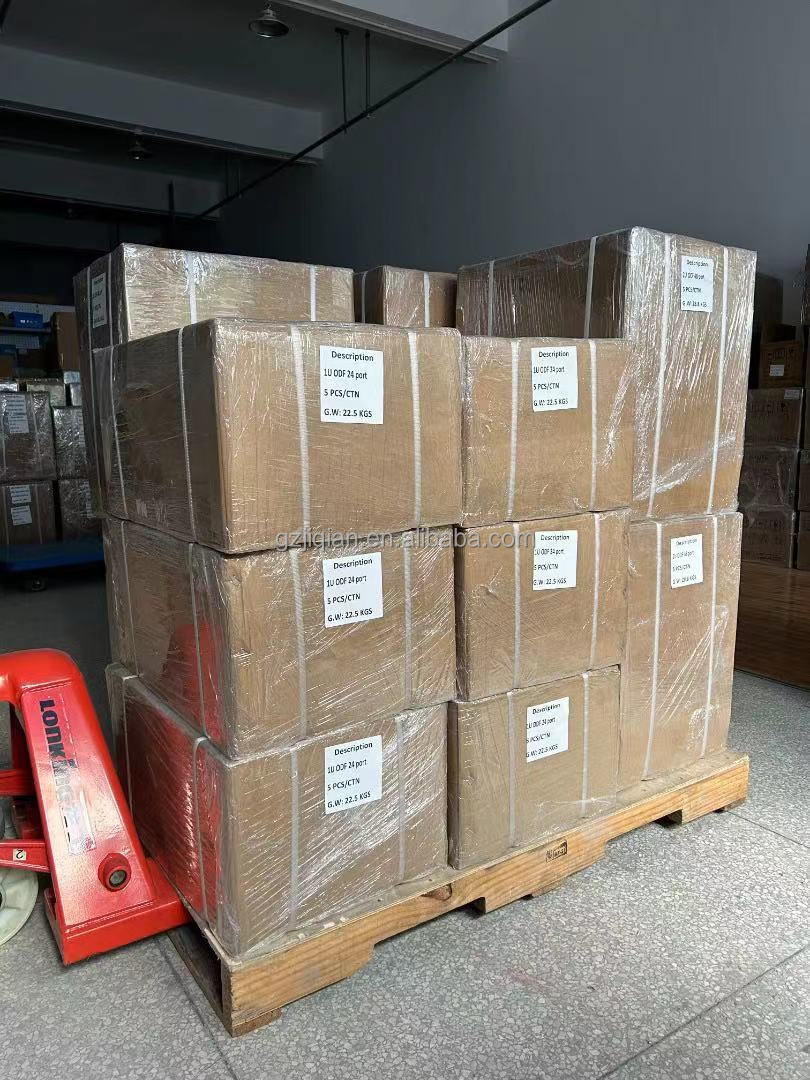
Our Packing and Delivery Process
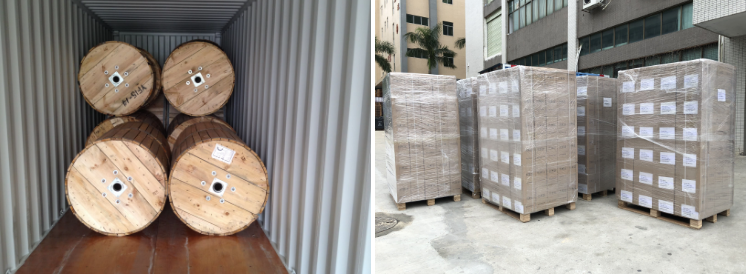
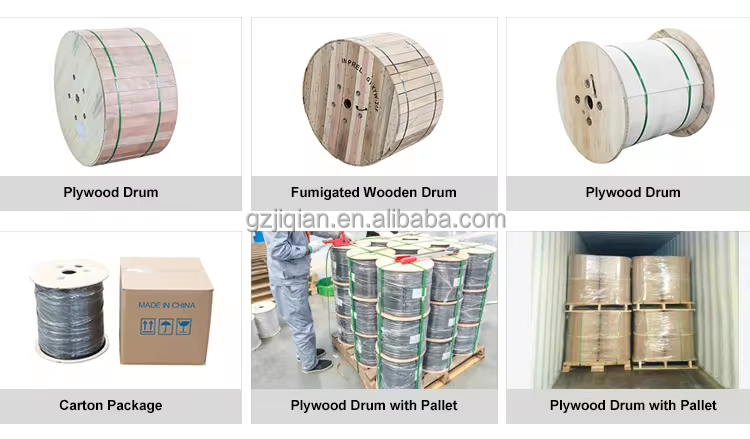
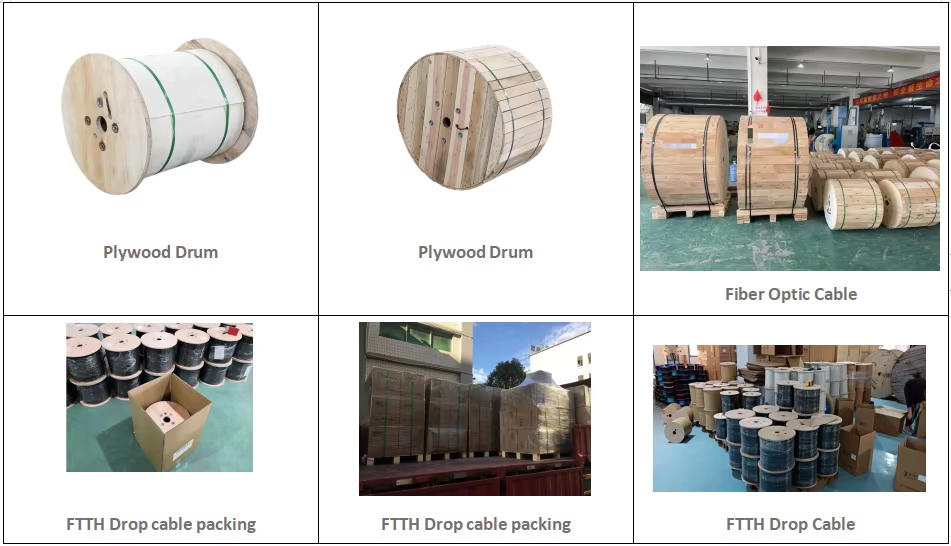
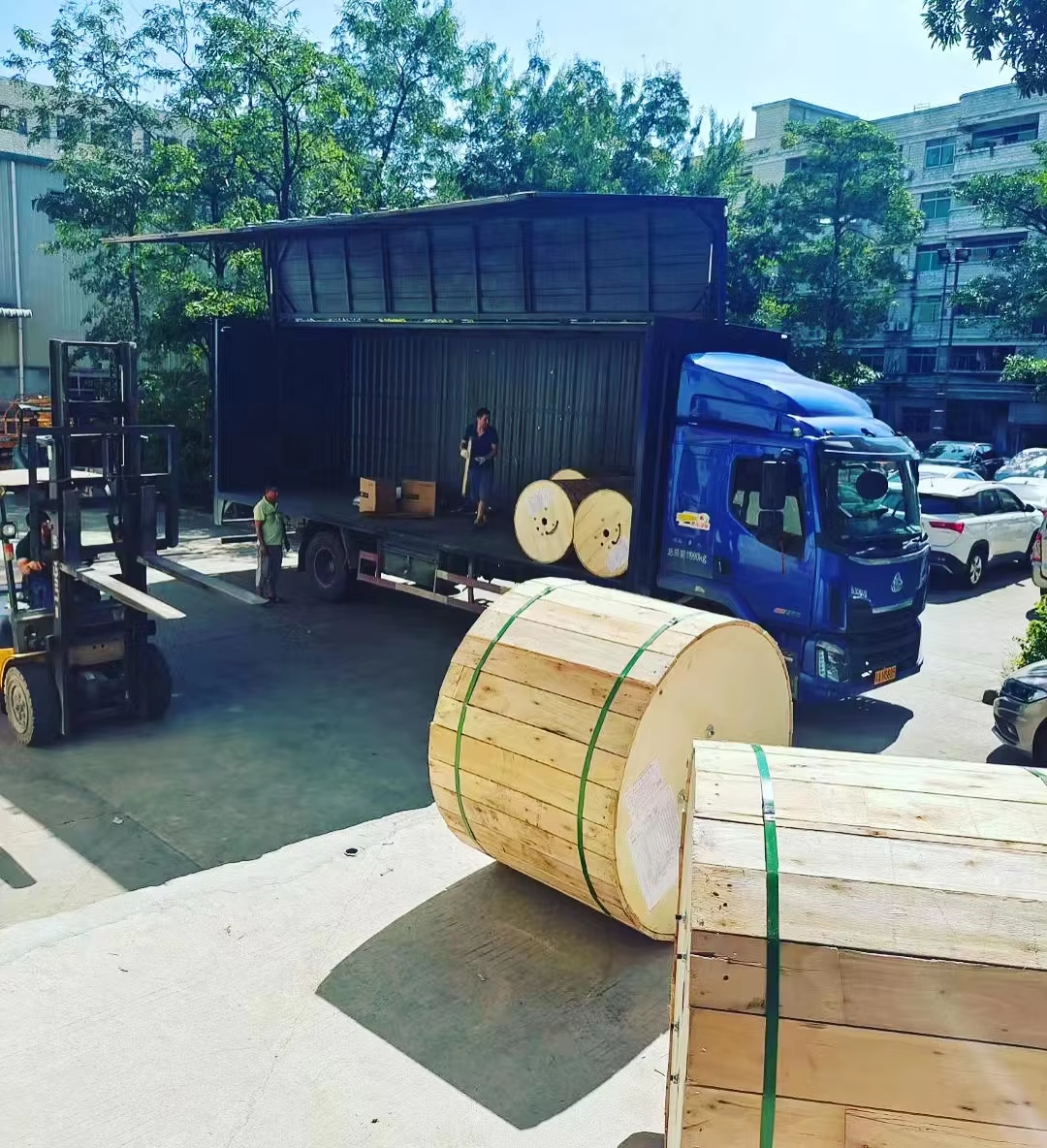
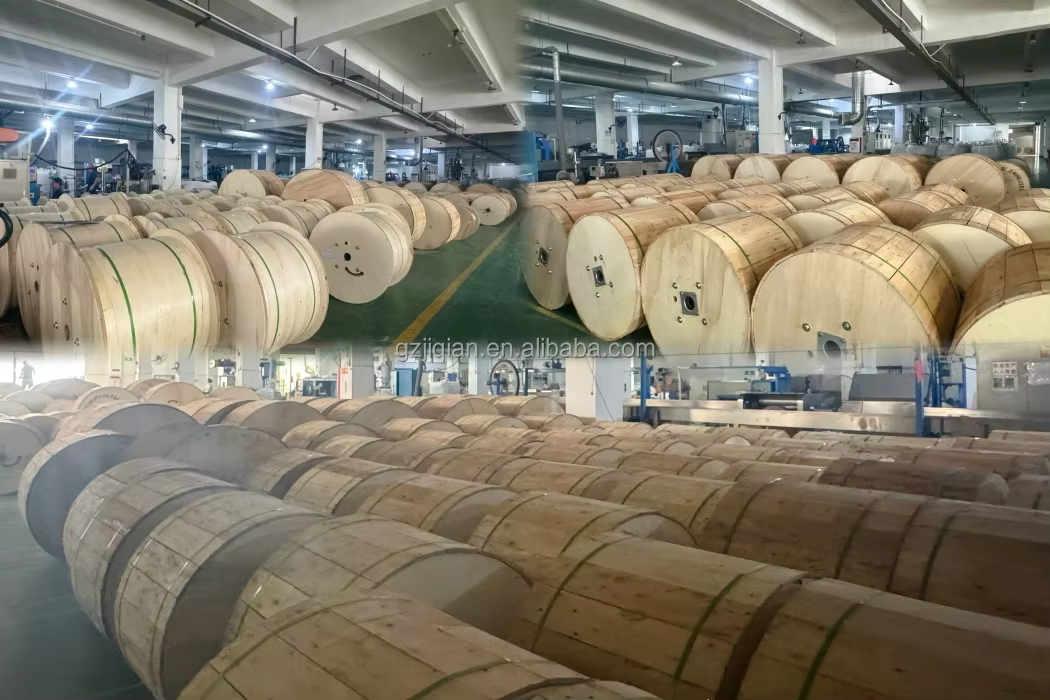
Our Packing and Delivery Process