Fiber Optic Cable News

About Fiber Optic Cable News

Fiber Optic Cable News is a dedicated source for the latest developments in the fiber optics industry. We provide up-to-date news, in-depth analysis, and expert insights covering fiber optic technologies, infrastructure projects, product innovations, market trends, and global connectivity initiatives. Whether you’re a telecom professional, network engineer, or industry enthusiast, our mission is to keep you informed and connected in the ever-evolving world of fiber optics.

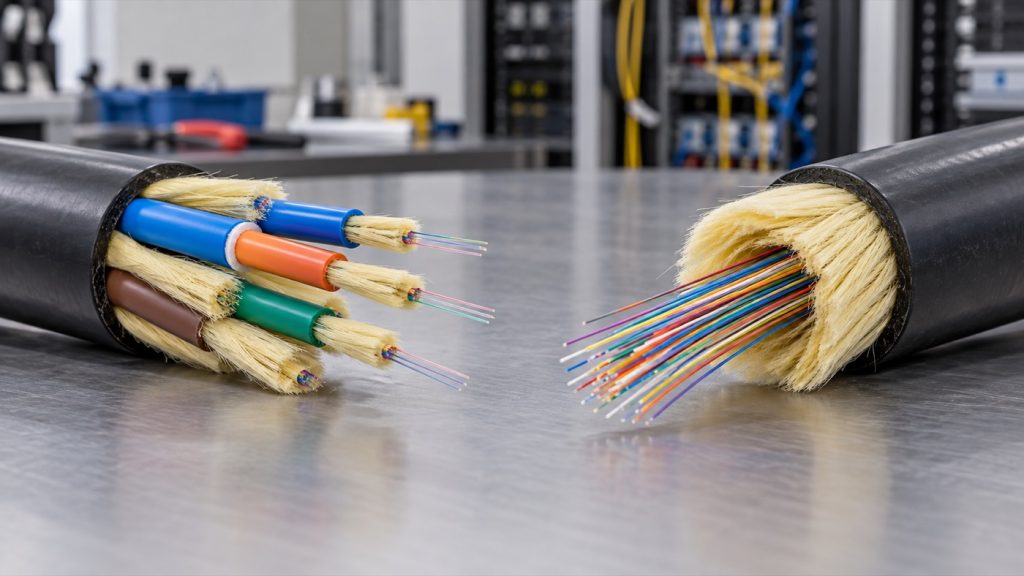
Breakout fiber cable and distribution fiber cable construction comparison

Breakout and Distribution Fiber Cables in Indoor Backbone Cabling

Introduction: Breakout and distribution fiber cables both serve indoor backbones, but independent subunit protection versus one shared jacket changes termination materials, field handling, and where each construction fits. A junior technician opening a cut sheet for an indoor backbone run sees the two cable names side by side, and they look interchangeable: both are multi-fiber, […]

Breakout and Distribution Fiber Cables in Indoor Backbone Cabling Read More »
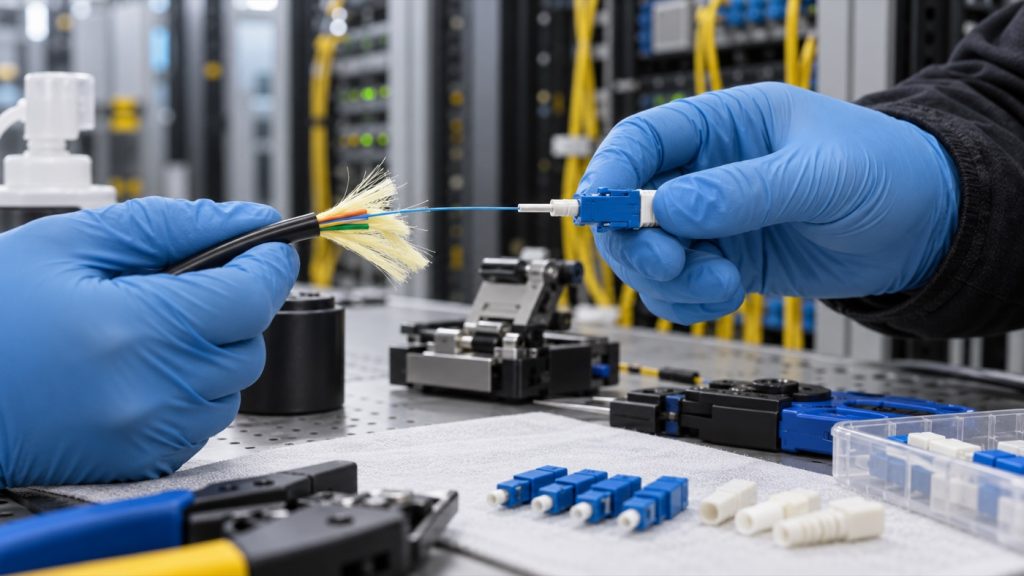
Technician directly connectorizing a 900 micrometer tight-buffered optical fiber

How 900 μm Tight-Buffered Fiber Supports Direct Connectorization

Introduction: A 900 μm tight buffer is the thin protective layer bonded onto each individual fiber, and it is the part that decides whether field connectorization goes smoothly. Most technicians meet this layer for the first time when they open a breakout cable jacket and find twelve separate subunits instead of a bundle of fibers

How 900 μm Tight-Buffered Fiber Supports Direct Connectorization Read More »

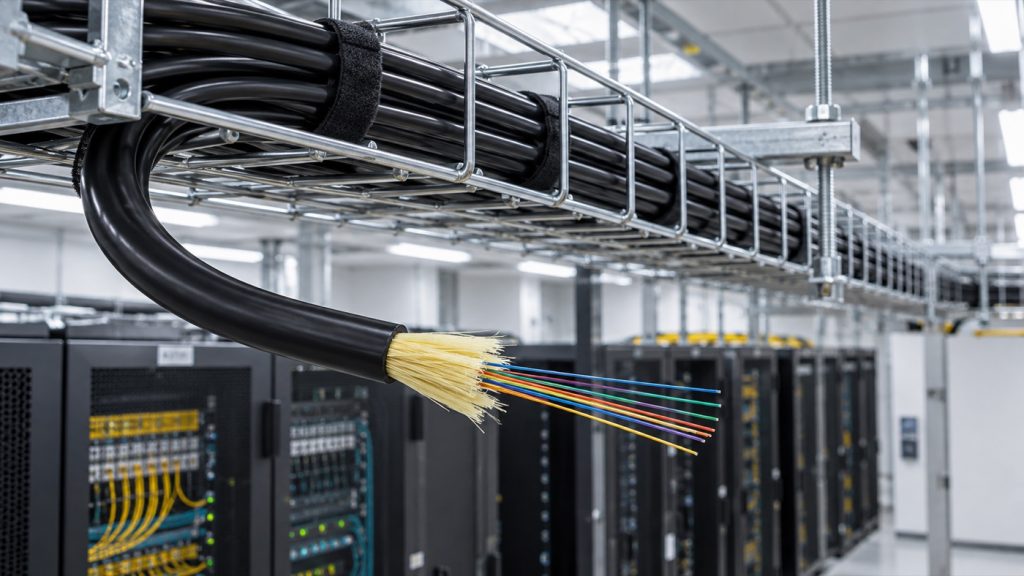
Non-metallic indoor fiber optic cable routed through a cable tray in an equipment room

Non-Metallic Indoor Fiber Cable for Cable Trays and Equipment Rooms

Introduction: Non-metallic indoor fiber cable changes how contractors plan cable tray routes, equipment room bends, pulling points, and separation from power circuits. In an equipment room, the fiber route is rarely a clean straight run. It leaves a tray, crosses above a rack, drops behind a patch panel, and may run parallel to power feeders

Non-Metallic Indoor Fiber Cable for Cable Trays and Equipment Rooms Read More »

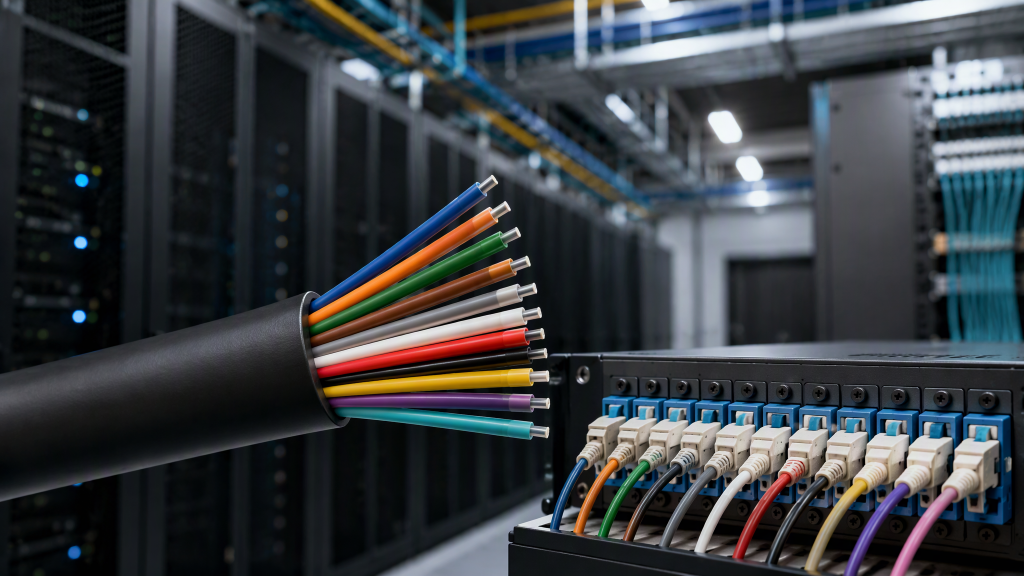
12-core indoor breakout fiber cable with 12-port patch panel in a data center backbone

How to Choose a 12-Core Indoor Breakout Fiber Cable for Data Center Backbone

Introduction: A 12-core indoor breakout fiber cable is a practical fit for data center backbone and rack patching when twelve independent 900 μm subunits, the right fiber type, and a suitable jacket match the route and termination plan. As you lay out runs from the main distribution area to racks and patch panels, the decision

How to Choose a 12-Core Indoor Breakout Fiber Cable for Data Center Backbone Read More »

24-core G652D OPGW on a 220 kV overhead transmission line

Specifying 24-Core G652D OPGW for 220 kV Transmission Lines: Span, RTS, and Fault Current

Introduction: A 24-fiber, 220 kV OPGW specification links a 400 m span and 40 kA fault duty to RTS, sag, and verifiable design evidence. The Specification Problem Behind a 220 kV OPGW Order A 24-core G652D optical ground wire can be manufactured in many conductor constructions, even when the fiber count and fiber type remain

Specifying 24-Core G652D OPGW for 220 kV Transmission Lines: Span, RTS, and Fault Current Read More »

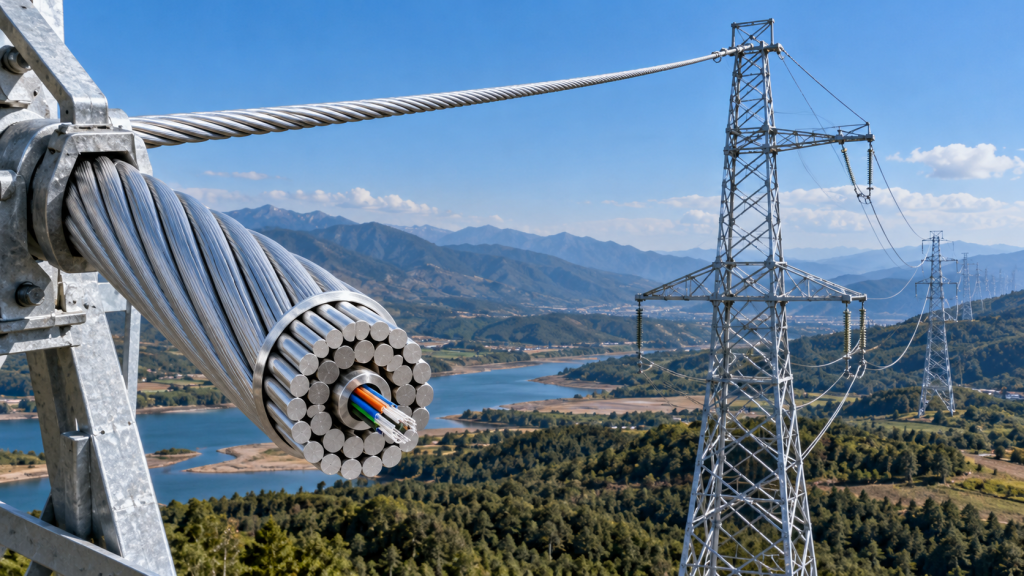
OPGW cable installed at the top of a high-voltage transmission tower with fiber-optic cutaway detail

What Does an OPGW Cable Do on a High Voltage Transmission Line?

Introduction: An OPGW cable sits at the top of a transmission tower and handles two jobs at once: ground-wire duty and fiber communication. For a transmission line electrical design engineer, that top position is the first thing to understand. It is where the shield wire normally sits, where lightning and fault current find a path

What Does an OPGW Cable Do on a High Voltage Transmission Line? Read More »

OPGW conductor on a high-voltage transmission tower with a thermal-design cross-section detail

Why a 40 kA Fault-Current Requirement Changes OPGW Conductor Design

Introduction: A 40 kA fault lasting 1.0 second can alter conductor cross-section, mass, sag, RTS, and tower load through coupled thermal and mechanical constraints. What a 40 kA Requirement Actually Represents A fault-current requirement is often written into an OPGW specification as one prominent number. The number is necessary but not sufficient. A 40 kA

Why a 40 kA Fault-Current Requirement Changes OPGW Conductor Design Read More »

OPGW smart grid substation communications

OPGW Cable for Smart Grid Substation Communications

Introduction: OPGW cable provides a grounded overhead fiber path for SCADA, teleprotection, and dispatch communications between smart grid substations. Substation automation depends on a fiber path between stations that is as dependable as the power line itself, and OPGW turns the overhead ground wire into that communication route. Engineers planning SCADA, teleprotection, and dispatch links

OPGW Cable for Smart Grid Substation Communications Read More »

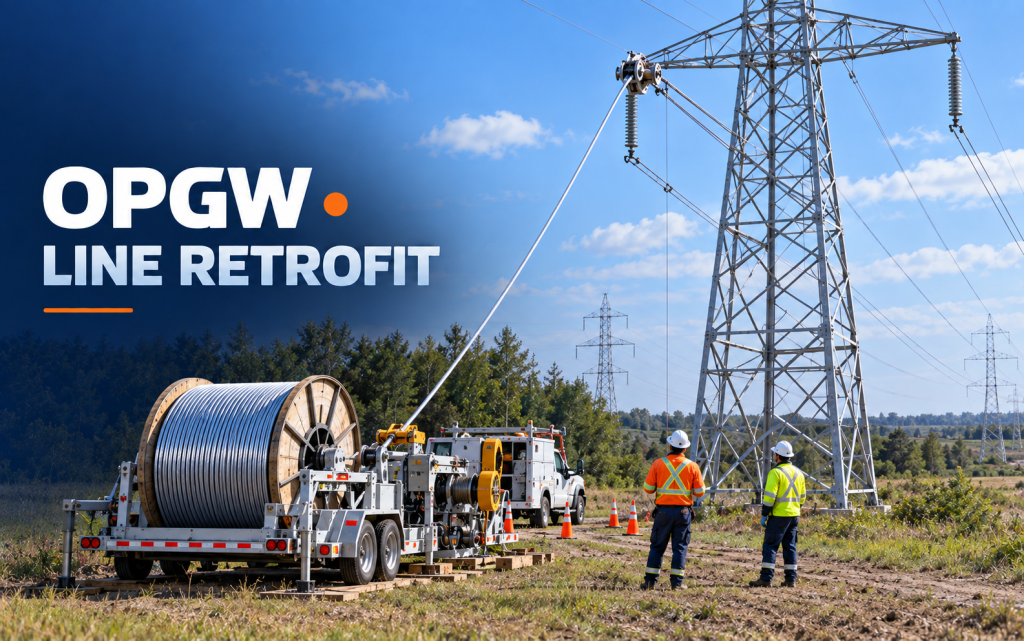
OPGW overhead ground wire replacement project

Replacing Overhead Ground Wires with OPGW Cable

Introduction: Replacing an aging overhead ground wire with OPGW cable can add fiber communications along an existing corridor when tower loading, clearance, span, and short-circuit duty align. Replacing an aging overhead ground wire with OPGW cable can add fiber communications along an existing corridor, but only when tower loading, clearance, span, and short-circuit duty align.

Replacing Overhead Ground Wires with OPGW Cable Read More »

Call +86 153 6086 9138 Email Us WhatsApp